Can a Precision Injection Molding Supplier Handle High-Volume Production?
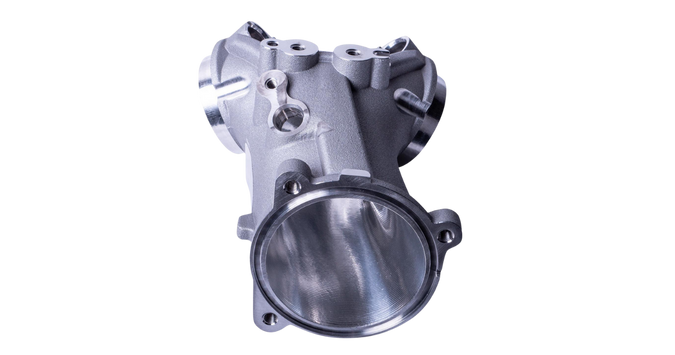
Yes. A precision injection molding supplier can handle high-volume production when tooling, machine capacity, process control, automation, inspection, and maintenance are planned around the required annual volume. A 4-cavity mold running a 25-second cycle can theoretically produce 576 parts per hour, or more than 13,000 parts in 24 hours before downtime and rejects. At 5 million parts per year, even a 1% scrap rate equals 50,000 rejected parts. High-volume capability depends less on machine count than on repeatable output over hundreds of thousands or millions of molding cycles. Buyers should examine cycle time, cavity balance, mold life, quality records, backup capacity, and maintenance planning before approving a supplier.
A supplier preparing for several million molded parts per year first has to convert annual demand into actual machine hours. A four-cavity tool running a 30-second cycle produces 480 parts per hour under ideal conditions. At 85% equipment availability, 7,000 scheduled hours provide about 2.86 million parts before scrap. Raising availability from 85% to 92% adds more than 235,000 theoretical parts without buying another molding machine.
That calculation leads directly to tooling because production capacity disappears quickly when a mold requires frequent repairs. A production mold intended for 1 million or more cycles normally requires more durable cavity materials, controlled heat treatment, reliable guidance, effective venting, and cooling circuits designed for repeated use. Resin choice also matters: glass-filled engineering polymers can wear gates, runners, slides, and cavity surfaces faster than unfilled materials.
A mold that produces acceptable samples during a 500-part qualification run has not yet demonstrated that it can maintain the same dimensions after 500,000 cycles.
For this reason, replaceable inserts are often used around gates, shutoffs, cores, and other areas that receive concentrated wear. If a small insert can be changed during planned maintenance, the supplier may avoid removing the entire tool from production for a major repair. A documented maintenance schedule also helps compare tool condition at 100,000, 250,000, or 500,000 cycles rather than waiting for flash, sticking, or dimensional change to appear.
Cooling design becomes the next production limit because cooling often occupies the largest portion of the molding cycle. Consider a 28-second cycle with 15 seconds assigned to cooling. Cutting cooling time by 2 seconds would reduce the full cycle to 26 seconds, increasing theoretical output by about 7.7%. The change is useful only if molded parts still meet flatness, shrinkage, appearance, and dimensional requirements after ejection.
That is why suppliers should qualify a stable processing window instead of quoting the shortest cycle achieved during a brief machine trial. Melt temperature, mold temperature, injection speed, transfer position, pack pressure, hold time, cushion, screw recovery, and cooling-water temperature should remain within controlled ranges. ISO 9001:2015 also places emphasis on controlled processes, documented information, monitoring, and corrective action, which supports repeatable manufacturing rather than occasional good batches.
Machine selection follows the same logic. A press may physically fit the mold but still be poorly matched to the required shot size, injection pressure, screw diameter, platen dimensions, tie-bar spacing, or plasticizing rate. Running close to the machine's operating limit leaves less room for normal material and process variation. For a long-term program, a supplier should also identify at least one compatible backup press before production begins.
That backup matters when utilization is high. If one molding cell is scheduled at 90% of available annual hours, a two-day repair can affect shipment dates immediately. At 75% utilization, the same factory has more room for preventive maintenance, tooling service, or temporary demand increases. Capacity reports should therefore show scheduled hours, usable hours, expected scrap, mold change time, maintenance time, and alternate equipment rather than quoting maximum nameplate output.
High-volume household products add another layer because exterior appearance and assembly fit often matter as much as raw production speed. An Appliance plastic injection molding supplier may manufacture housings, bezels, handles, control-panel parts, brackets, fan components, or internal structural parts that must fit mating components consistently across long production runs. A 0.3 mm dimensional shift can become noticeable when several molded parts meet in the same appliance assembly.
For visible housings, suppliers also have to manage weld lines, sink marks, gloss differences, flow marks, gate vestige, color consistency, and texture replication. If a housing uses 600 g of ABS and annual output reaches 1 million pieces, finished parts alone consume about 600 metric tonnes of resin before runners, startup material, and rejects are counted. A reduction in scrap from 3% to 1.5% would save roughly 9 metric tonnes of finished-part-equivalent resin over that production volume.
Material handling therefore deserves the same attention as molding parameters. Moisture-sensitive polymers should be dried according to the resin manufacturer's published processing conditions, while resin lots, color masterbatch, additives, and regrind percentages need traceable identification. Mixing an incorrect grade into a 2,000 kg material lot can affect far more parts than a single machine adjustment, especially where flame performance, impact strength, UV resistance, or dimensional stability is specified.
Material traceability should connect incoming resin lots with production dates, machines, molds, cavities, inspection records, and finished-product lots whenever the application requires that level of control.
Automation becomes more practical as annual volume rises because repetitive handling can be performed at the same point in every cycle. A robot removing parts from a 20-second molding cycle repeats the operation 180 times per hour. Over an 8-hour shift, that is 1,440 removal cycles. Automated takeout can also keep operators away from moving mold areas while supporting consistent cooling and handling time after ejection.
Automation does not need to cover every operation. A supplier may use robotic part removal and automated gate separation while keeping final packing manual, or combine molding with vision inspection, laser marking, assembly, counting, and box loading. The right level depends on cycle time, labor content, annual quantity, product geometry, and how often the design changes. An automation cell built for a five-year program has a different cost case from one serving a 12-month product run.
Inspection must then scale with the speed of the molding cell. If a four-cavity tool produces 600 parts per hour, checking one part every four hours samples only 0.04% of 2,400 produced pieces. That may be adequate for a stable noncritical dimension but weak for a feature that affects sealing, electrical assembly, or visible fit. Inspection frequency should therefore reflect feature risk, process capability, cavity differences, and historical performance.
Cavity identification helps because an eight-cavity mold can produce eight slightly different dimensional distributions. Combining all measurements into one dataset can hide a problem limited to cavity 6. Suppliers may retain cavity-specific records and use dimensional gauges, optical measuring systems, CMMs, weight checks, or vision systems depending on the characteristic. Where statistical process control is used, Cp and Cpk should only be interpreted after the process and measurement system are shown to be stable enough for the calculation.
Quality planning also has to account for sample size. Measuring 5 pieces at startup provides different information from measuring 30 pieces from each cavity across several production intervals. For a four-cavity mold, collecting 30 measurements per cavity produces a 120-piece dimensional dataset, giving engineering teams a much clearer view of cavity-to-cavity distribution than a small mixed sample collected from one box.
Production records should connect inspection results with actual molding conditions. Modern machines can record cycle time, fill time, peak injection pressure, transfer position, cushion, barrel temperature, and other parameters for each cycle or production lot. If the normal fill time is 0.82 seconds and later production begins averaging 0.91 seconds, the supplier can investigate material temperature, viscosity, vent condition, or machine performance before the change appears as a large quantity of rejected parts.
Maintenance records provide another way to control long runs. Vents may need cleaning, ejector components may require inspection, slides need lubrication, cooling circuits can accumulate deposits, and seals eventually wear. A mold running a 25-second cycle completes about 3,456 cycles in 24 hours of uninterrupted operation. At that rate, 100,000 cycles arrive in less than 29 production days, so maintenance based only on calendar months can be misleading.
Spare parts reduce the effect of predictable wear. A supplier may stock ejector pins, springs, seals, heaters, thermocouples, gate inserts, date inserts, sensors, connectors, and other components selected for the mold. Holding a $300 wear component in inventory can be reasonable if its absence could stop a molding cell producing thousands of dollars of parts per shift.
Production economics become clearer once tooling, material, labor, machine time, scrap, maintenance, quality inspection, packaging, and secondary operations are calculated together. A $150,000 production mold spread across 100,000 parts represents $1.50 per part before operating costs. Across 5 million parts, the same initial tooling amount falls to $0.03 per part, although maintenance and replacement components still need to be included.
Small cycle changes also compound over long programs. Moving from 24 seconds to 22 seconds increases theoretical cycle output by about 9.1%. On a four-cavity mold producing 5 million parts, the reduction saves more than 630 machine hours. The engineering team still has to confirm that the faster cycle does not increase warpage, residual stress, sink, dimensional change, or reject rates enough to erase the saved hours.
Buyers can test a supplier's production claim by asking for numbers rather than general descriptions: proposed cavity count, validated cycle time, expected scrap rate, available molding hours, planned utilization, mold maintenance interval, backup press identification, inspection frequency, and historical performance on comparable programs. A supplier quoting 8 million parts per year should be able to show how many hours, machines, molds, and cavities are required to produce that quantity.
A useful review can be reduced to a small operating table:
| Production item | Example planning figure | Why it matters |
|---|---|---|
| Annual demand | 5,000,000 parts | Establishes required capacity |
| Mold cavities | 4 | Determines parts produced per cycle |
| Validated cycle | 25 seconds | Sets hourly production rate |
| Equipment availability | 88% | Adjusts theoretical capacity |
| Scrap assumption | 1.5% | Changes saleable output |
| Planned mold service | Every 100,000 cycles | Protects dimensional consistency |
| Backup machine | 1 compatible press | Reduces interruption exposure |
Those figures should be compared with actual production records after launch. If scrap was quoted at 1.5% but remains above 3% during the first three months, the added material, inspection, machine time, and schedule pressure should be investigated rather than accepted as normal startup loss. A program producing 5 million parts would create 75,000 additional rejects when scrap rises from 1.5% to 3%.
Supplier experience is therefore easier to judge from comparable production history than from factory size alone. Buyers should ask whether the company has run similar resin families, wall thicknesses, cosmetic surfaces, tolerance ranges, mold sizes, and annual quantities. A shop that successfully produced 10 million simple caps in 2025 may still need different tooling and measurement capability for a four-cavity appliance housing with textured surfaces, inserts, tight mating dimensions, and multiple assembly features.
Before production approval, a controlled run can expose issues that short sampling misses. A 24-hour run at a 30-second cycle represents as many as 2,880 cycles, providing enough time to observe heat balance, resin handling, automatic operation, part ejection, cavity consistency, inspection workload, and machine stability. Longer validation may be appropriate when a product has demanding dimensional, cosmetic, regulatory, or assembly requirements.
Purchase agreements can then define measurable expectations such as approved resin grade, revision level, cycle assumptions, inspection method, traceability, packaging, mold ownership, preventive maintenance responsibility, spare components, and response requirements for nonconforming product. If the agreed reject ceiling is 1.0%, a monthly output of 400,000 parts allows no more than 4,000 rejects under that metric, giving both sides a number that can be reviewed against production records.